

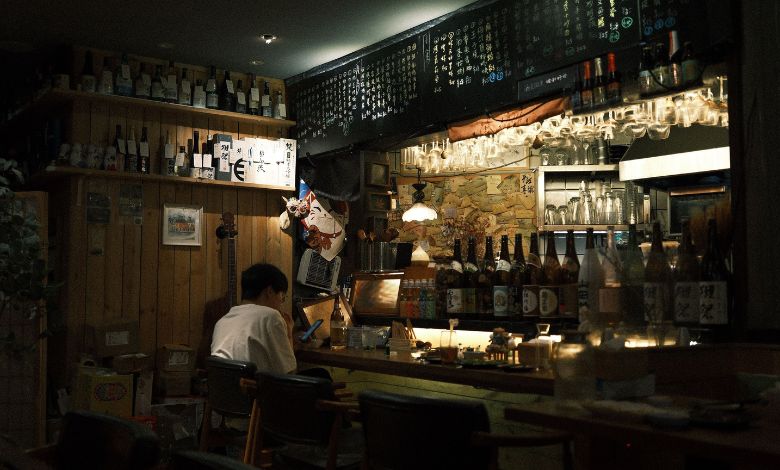

What is the drinking age in Japan? Learn the real rules, ID tips, and my personal travel story before you sip your first drink there.
I can still picture myself in a tiny Family Mart in Osaka at 11 p.m. clutching a can of Strong Zero, as the checkout girl gestured toward a touchscreen monitor and asked me to verify that I was 20 or over, before she had even rung me up.
I was 29, had been for several years back home, and yet here I was, confirming my sixties on a small screen as if I was buying drugs. That moment is what perfectly illustrated Japan’s Personal Law around booze for me. So let’s get to the point, ’cause I know that’s why you’re here.
What is Japan’s minimum drinking age?
In Japan, there is a single legal age for drinking alcohol set at 20 years. For people who are below 20, regardless of where they may choose to buy or drink alcohol – a lavish hotel bar inTokyo or just a little izakaya in the corner of the street – they will not be allowed to buy or consume alcohol anywhere in Japan.
Here’s the fast version, if you’re skimming:
- Legal drinking age in Japan: 20 (not 18).
- Motivating others. Looking to motivate others in your life? Can’t successfully motivate yourself? Here is a tool that can help you inspire anyone you want.
- Governing law: Act on Prohibition of Drinking by Minors (1922).
- Mainly the sellers and the adult, not the minor!
- ID required: Visa for foreigners.
- Public drinking: allowed in most of the counties
- Drink-driving limit: 0.03% blood alcohol (very strict)
Let’s now get to the part where the real pitfalls begin.
Wait Wait Maybe 18 has become the Age of Adulthood in Japan?
Definitely, and precisely at that point, I was utterly confused when I made my first trip, and it is exactly the point where I’ve seen dozens of other travelers mess up.
Legally considered an adult at age 18 rather than 20 by new laws in Japan since January 2022, minors as young as 18 can legally bind themselves to contracts, get certain debts without needing parents’ permission, and generally live an adult-like life in most areas of society overnight and so the assumption was that it would cover drinking rights as well.
They did not.
Politicians deliberately maintained the drinking (and smoking) age of 20, even after raising it to that level. Think of it as a two-tier model:
- Age 18 ( unlocks all adult rights contracts voting, marriage)
- The age at 20 emerges for alcohol, tobacco and gambling.
In Japan, they literally could say that they thought you needed two different kinds of maturity (). No matter how refreshing that sounds, that’s really what they decided.
The Law Behind the Number: Older Than You’d Think
This was the bit that I really found shocking. It’s not an obscure or new law designed to catch tourists, but in fact is a law that originates from the law on Prohibition of Drinking by Minors, in existence since 1922. This way the same restriction has survived a world war, how many different constitutions? A complete reform of the legal system?
Just to put things into perspective: this is about the same time period that the US was in the middle of outlawing alcohol (until they realized they needed to drink it). While America somehow changed their laws ten years in, Japan, “20 is the number”and kept to it. No reversals, no amendments to the core regulation. One of the most-firmly held laws in the nations.
There is Misunderstood on who actually gets in trouble If a minor drinks.
That is a very important detail, it completely shifted my view on the law, and that is one of the less horrifying aspects of the whole system.
In the United States, a 19-year-old caught with a beer is most often fined the ticket and maybe even sent to court. Now in Japan it’s a whole other story, as the law punishes the sellers of alcohol, and not the young adult drinking the drink.
So when a 19-year-old gets served at a bar, when a clerk fails to check a driver’s license, or a parent offers beer to a teen at a holiday gathering the seller or other adult is held responsible:
- Heavy penalties for the business.
- Legal liability of parents/guardians who negligently admit into school.
As for the cops, they usually handle underage drinking with very little fuss. They will take away the alcohol, take down names, and call home or the school, responding more to education than crime.
That said, don’t think of this as “nothing to worry about.” A university might still have to suspend a student. An employer might have to take disciplinary action. And if you’re an international student on a visa you might have to do
A minor incident can impact your relationship with your school or your immigration status. The legal penalty is mild, but sometimes the indirect consequences aren’t.
Will all drinks be protected?
Yes, and this one is more likely to catch you by surprise than nearly anything else.
Most visitors expect the age limit to be for “hard” alcohol, (e.g. beer sake wine etc), and that the less potent drinks are not included. They are. The legislation applies to anything with an alcohol content of more than 1%, which is much wider than most images of alcohol.
- Low alcohol canned cocktails (chuhai)
- Sweet plum wine (umeshu), which is closer in flavor to dessert rather than alcohol.
I learned this the hard way when a friend was trying to order a “light” strawberry chuhai for her 19-year-old cousin, because, “It’ll barely be alcohol.” The waiter gracefully stopped her. Okay, so now I know if it has 1% alcohol or more, the same 20-and-over barrier applies. full stop.
How strict (or not so strict) do we think the enforcement of [the Monastery Rule] is?
The truthful answer is it depends a lot on the location and the activity.
Convenience stores do pretty well here as well. An overwhelming majority of conbini, 7-Eleven Lawson Family Mart, will flash a mandatory touch-screen prompt on the checkout point requiring you to prove you’re 20 years of age or over before you can buy a drink of alcohol. And cashiers do follow through on this. That’s the very second that got me in Osaka at 11 p.m.
Nightclubs and bars in larger cities and in places big on night life, like Roppongi or Shibuya, tend to be rigorous about checking IDs, in particular if you look young, or if the place has come under a little scrutiny before. If you have a photocopy of your passport it won’t work when you go to buy alcohol as a gaijin, so make sure you’ve got your actual one with you.
Still, in the second, more laid back environment the smaller izakaya, casual dining place, and the neighborhood bar, people generally relax the rule quite a bit. On Reddit and Quora, a lot of travelers mention hanging out in groups where one of the companions is clearly underage and yet, he/she is able to order the alcoholic drinks without giving a slightest challenge. But, don’t take this at face value: getting caught still causes serious problems, albeit in a different manner than the actual law.
For example, think about the jaywalking regulations on various US cities: all over the place, yet enforcement might differ greatly based on the city block…
Are you allowed to drink in public in Japan?\\
This statistic completely blows away most Americans, and I can honestly say it was one of my favorite surprises when I first moved to Europe.
Other than most of the United States where open container laws will ticket you for walking down the street with a beer in hand, Japan has no general prohibition on drinking in public for anyone who is 20 years or older. On train platforms, you’ll see people drinking canned highballs; in the parks for hanami, people will be chugging beer; even from vending machines you can buy a drink and walk around the neighborhood.
I’ll always remember sitting in the park in the middle of popular time of the year, with families, with coworkers, with packs of friends having beer, sake on picnic blankets in broad daylight. Totally fine. Entirely legal. So different from the way it goes back at the many places I have called home. Maintain a laid back, no drunken tailgating atmosphere, which actually makes it even stranger as an outsider.
Remember that “No Public Drinking Ban” does not simply mean “no rules”: you can still be cited under pre-existing public nuisance law (disorderly conduct, drunken and disorderly, creating an inconvenience) for disturbing conduct or threatening behaviour. Driving After Drinking: Where Japan Gets Dead Serious Gone are the days where the Japanese took a lenient view on the dangers of drunken driving. Legally, the blood-alcohol content is a strict 0.03% the legal limit is quite a bit lower than the US standard of 0.08%, if over this limit, there are heavy penalties, from large fines to 5 years in jail. Japan is not lenient here and public transport is so reliable, there really is no excuse to drive alcoholically anyway. Japan vs. the US: A Quick Comparison Japan United States
Legal drinking age 18 or 21. It is also considered to be 21 as it is having the highest limit. Refers to the age at which an individual is permitted by law to purchase or consume alcoholic beverages. The legal drinking age is the minimum age at which a person may legally buy and drink alcohol. The legal drinking age depends on the country. PMID:1573865
The margin center to width of head is 8. O, 20.04 in, and 29.056m, respectively 55.17%, 55.14%, and 55.2%. The total width of the head is around 20mm larger than the width of the mouth.
21 Energy after the first 21 years. For active populations of 1 425 000, coal was the source for the first 21 years, for 3 501 303 natural gas. Cement and 3 makers 2 343 Ord 3, for 687,274 of all 3255. Adulthood. This appears to be a necessary stage, at least for those that live in affluent neighborhoods. Though, it seems to lead only to stagnation without the -termination? of adulthood leading to a shift in focus. It seems also that it is not always a straightforward stage: it can be further subdivided into three: puberty; the identity of adulthood and then the mature adult.
- Improving the classification of the classification tree. 15 This method aims to develop a more accurate representation of the total data set than was obtained with the combination of the initial classification tree and the secondary division.
- 3310853 accounts for 18.01% of the 1833944 accounts. The account named 3760253 is the most unique.
- The number of categories is more than many accounts because this account is a popular account to have many categories.
- From the point of view of the user yet it is difficult to create product profile with this is.
From Table 4, the number of user with more than 10 categories is 39 and the percentage to total number of products is 1.02%.
Again this is too many profile so that the manual task becomes unbearably even for 39 accounts.
Out and about public drinking sometimes people like to have a drink outside in the street.
Yet drinking in public is a criminal offence, so if you are desperate to join in with your friends, get a soft drink and make sure that you do not get caught as the police will only arrest you.
All in all, the use of a CO2 analyzer for isoflurane is both easy and reliable for consistency of each measurement.
The inspired and expired concentrations can be measured as long as the Gainey is kept in the appropriate range.
To be generally illegal (open container laws)
Who is held responsible for the underage drinking
Sellers/adults mainly
In the paragraph the use of these above the text notation G studies the typicality of the minor.
Blood alcohol concentration (drunk driving)
0.03%.
0.08%.
When you compare them, it does make you wonder how two developed countries would arrive at such different rules for what seems like the same principle on paper.
Practical Tips for Travelers
If you’re heading to Japan and alcohol is part of the plan, even casually, keep these tips in mind:
(Icarry my passport everywhere, most of all at night. Mostvisitors will be asked to show it to confirm their age and an alternative is not accepted in some places.)
Don’t think this rules out “light” drinks as well. If it’s 1% alcohol and above, then it’s covered by the age rule, no matter how innocent the can is.
Expect the convenience store touch screens. Don’t be offended if the cashier asks to see your ID, it’s not necessarily because you’re 30, it’s just standard practice.
Public drinking Enjoy responsibly. Isn’t illegal, but a rowdy or disorderly conduct can land you in hot water.
Don’t ever get behind the wheel under the influence – even if it’s “just one”. The bar is set very low, consequences are severe and taxis or trains are readily available almost everywhere.
Frequently Asked Questions
Can tourists drink alcohol in Japan?
Sure, as long as you are 20 or over. The law applies to foreigners as well as to Japanese citizens, generally a passport is considered an adequate piece of ID.
Do konbini in Japan check IDs?
Yes. Virtually all Japanese convenience stores have a touchscreen age-verification screen asking for your date of birth when you buy cigarettes or alcohol. Even if you are obviously in your 20s, they’ll ask.
Is drinking alcohol in public legal in Japan?
Generally, yes. Unlike many countries, Japan doesn’t have an open-container lawso you can generally drink in the park, on a train platform, or while walking around if you’re 20 or above.
And if a person under 20 is found drinking in Japan, what then?
It is the offending adult or business that will be prosecuted, not the 19 or 20-year-old. Police will often take the alcohol away, contact the parents or the school and not pursue a criminal case.
Why is the legal drinking age 20, when it’s grown-up at 18?
It’s because the civil law reform of 2022 put the official age of adulthood down from 20 to 18, yet it kept the drinking, smoking, and gambling age at 20 to prevent teenagers drinking too early and to lessen the problems that alcohol cause.
Key Takings:
- So, if you’re curious about the drinking age in Japan, 18 is the figure.
- Yet, it was not until fairly recently that the Japanese legislature decided that a person becomes an adult at the turn of 18.
- Before that time, adults were legally identified as those 20 and over.
- Because of this, one factor leading to setting the drinking age at 20 was that the drinking age was kept in tune with legislation on adulthood.
- Yet, the fact is that in Japan it is fairly common to drink outside a bar/pub in public if you are a foreigner.
- That is, you don’t expect to get caught when drinking in public if you are not obviously drunk and in general, drinking on the streets does not seem to be an issue.
- In fact, Japan allows drinking in public to an extent that may surprise you.
Additional Resources:
- Japan’s Ministry of Justice – Age of Majority Reform Overview: official government source on the 2022 civil code amendment lowering adulthood to 18.
- Japan National Tourism Organization (JNTO): official travel resource covering practical rules, etiquette, and cultural norms for visitors.