

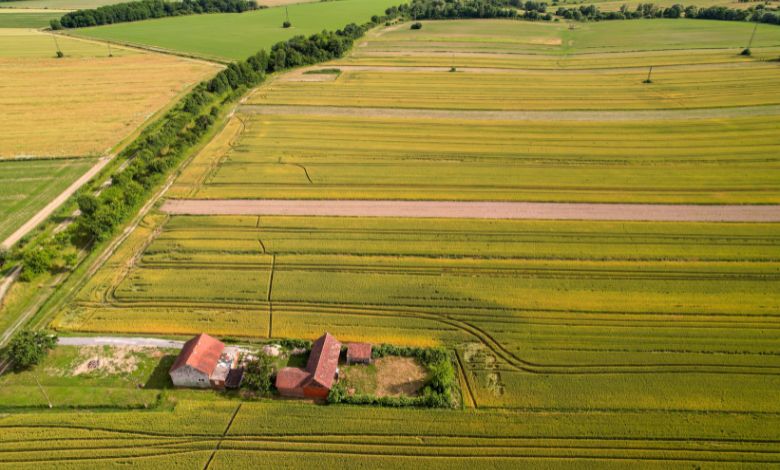

Landlocked with no road access? Discover how an easement by necessity legally grants access across your neighbor’s land to the road.
A few years back my uncle I was invited in a mild panic.He just inherited a beautiful ten- acre parcel from his grandfather, rolling hills, a negligible stream, and the whole postcard package.
That was it just The only way to approach a problem the public road Run straight through his neighbor’s front yard, And he was a neighbor just set a fence.No gate.No warning.Just… Block.
He asked me half jokingly:“Kan. Do you really do that? Should I board the helicopter right now?
That question sent me down a rabbit hole of property law which I didn’t expect to enjoy.And right on the center of it sat a legal concept called easement by necessity.
If you’re Here because you (or someone you understand) just Discovered their land Landlocked, remove it a breath. You are not stuck. I’ll go through it the way I want someone would go, my uncle. The law creates a theory to absolutely this circumstance, a well-established principle of personal law.By that, obviously, with real examples, And zero legal jargon overload.”
What is an Easement of Necessity?
An easement of necessity is a legal right. It allows a landowner to cross a neighbor’s property to know their own land, because their parcel otherwise, it will be completely cut off. Any public road.
Courts create this right automatically.Nobody signs it.Nobody He negotiates it over coffee.
The law simply refuses to allow it. A piece of land becomes permanently inactive, so it steps in and grants access.Here’s Most of it people miss:Courts Do not grant new rights generously.
They consider it an implied easement, This means that no action has ever spelled it, but the court guesses the original owner What would be his intention when they distribute the land.
No seller of a chunk of property plans to be an inaccessible island, so the law fills up that gap for them.
Quick analogy:
The picture is of your grandmother baking one giant pie and cutting it into slices for her kids.
If he touches it by mistake one the child a slice There’s no way to get to that without cutting someone else’s piece, you’d assume it wasn’t on purpose.
The law treats landed property the same way.
It looks back. The moment Land “cut” and says: access was clearly implied, either nobody wrote it down.
The 2 Legal Requirements You have to prove it.
Courts don’t furnish an easement of necessity just because someone gets it. It’s inconvenient.
You must be satisfied. Two conditions, And both take real weight.
1. Former ownership consortium
Your Landlocked parcels and your neighbor’s parcel What would have started as one single piece of land, Owned by the same person.
If the two properties never shared an ownership history, You cannot claim an easement On this neighbor’s ground.
You necessitate a shared origin story.
2. Strict Necessity But the Moment of Division
This is the part that visits people over.
The necessity must be present the exact moment Immovable property is alienated.
If the division Again one piece with zero legal access To a public road Right then and there, probably. A case.
If present on access. The time of the split and later disappeared for some unrelated reason, You watch a weaker, And different, legal argument.
Both boxes require checking.
Miss one, And the case breaks down.
A Real- World Scenario It clicks.
Picture A landlord as owner of 100 acres running with a public highway.
Life happens, priorities change, etc they sell the back 20 acres To a buyer they hunt some peace and reduce.
Except, surprise, private land In the box those back 20 acres But every side.No road frontage.No driveway.Nothing.
The law Reject permanently useless land, So a court Steps and basic rules:
“The original owner clearly meant for the new owner to know the highway by crossing the front 80 acres.”
He creates order. An easement of necessity, Not born of a signed contract, but of it common sense And legal precedent working together.
“It’d just take it simple” versus “strict necessity”
Here’s where the most hopeful landowners become their expectations checked.
Most states To implement strict necessity, Importance your property With really mandate to be grounded.Zero other legal way inside or outside.
If another route is even a painful one, courts Denial in general the easement.
Mud Raw?Three miles out of the way?It doesn’t matter.
My uncle Indeed it was a narrow gravel path He could technically use, one That there was a flood every spring And I changed a swamp.Disappointing.Extremely.To be legally ineligible for a necessity claim?
Also, unfortunately, yes.People Often confused this doctrine with two close relatives:
- Easement of prescription, Earned through years commence, continuous use of a path. Think favor this squatter’s rights, But for accessibility.
- Implied easement, Based on past usage patterns the land split, instead of strict necessity alone.
Here’s A quick side by side to retain them straight:
| Type of Easement | How It’s made | Cover Requirement |
| Easement by Necessity | Implicit by law after partition of land | Strict necessity, property Truly landlocked. |
| Easement of Prescription | Long- term, commence, continuous use | Usually 10- 20+ years of use (varies by state). |
| Implied Easement | Prior existing use Before sharing | Evidence: The use was clear and had to continue. |
WHO Picks The Real Way?
Here’s One detail that surprised me:
The neighbor One whose land is crossed is said to be lawful. The servient estate, Usually a choice has to be made on the specific route, As long as it makes sense.
So if your neighbor prefers to run with you. The tree line instead of past their kitchen window, They usually get it a say.
It Can Sit Dormant to Decades, and Still Hold Up
An easement of necessity doesn’t end just because nobody used it. Years.
It can be disabled by this. Multiple owners and several decades, and courts will still enforce it the moment someone actually needs it.
Property Hands change, families transfer on, memories fade, legal rights do not fade quietly with time.
That being said, it could be over.
If a new public road Finally provides a landlocked bar. Parcel direct access, go necessity disappears, and the easement ends with it.
Meaningful: the doctrine is there to solve. A lack of access, Not to be handed over to anyone. A permanent shortcut For convenience.
Do This Vary of State?
Yes, and it means more than that.
Most people expectation States To rule property law Individually, that is the exact standards Shift depends on where the land Sitting:
- How difficult courts Explain “strict necessity”
- How far back courts to investigate ownership history
- About courts Compensation is required the neighbor
If you are seriously pursuing this, do the research. Your specific state’s case law Or talk to a local real estate attorney instead of assuming national rules apply everywhere.
Your step- by- step action plan
If you stand inside. My uncle’s Shoes now, here’s how the process Typically displayed:
- Traces go to ownership history.
- To draw deed records To confirm both parcels There was once a connection to the same larger tract.
- Document the lack of access.
- Investigate, map and collect. Title reports Not proven legal route To a public road exists.
- Attempt to negotiate first.
- A direct conversation, even an awkward one, can protect years of legal fees.
- Many neighbors don’t secure it. A legal obligation even exists.
- Consult. A real estate attorney.
- Withdraw the DIY Observe here.
- An attorney can confirm if your situation actually found the strict necessity standard.
- File a quiet title or declaratory judgment action if necessary.
- Courts formally acknowledge the easement through this process when negotiations fail.
Can an easement be eliminated by necessity?
Yes, it usually ends sometime. A new public road gives the property direct legal access, which ends the original necessity.
Do I have to reimburse? my neighbor to the easement?
It depends.
Your state and the specifics of your case.
Some jurisdictions allow compensation discussions, Especially when the crossing Reasons real inconvenience or property damage.
Is it the same? a right of way?
Absolutely not.
“Right of way” is a broader term which includes easements created by several different methods, including claim, contract or prescription.
What if I prove it? the original common ownership?
without that shared ownership history, You cannot normally set up an easement of necessity, You have to explore a different legal route Instead.
Final Thoughts:
- My uncle’s situation worked, in case you were wondering.
- A title search confirmed both parcels. There was once a connection to one property, The strict requirement was examined, and a brief (if any tense) conversation with the neighbor solved everything before I reached the courtroom.
- Not all cases are simple to end, but understand your rights: Initial savings real stress later.
- If your land Earth is locked, you are not powerless.
- Stand up your facts first, Before you knock.
- Your neighbor’s door or call an attorney, and the whole process There is a lot to ascertain less intimidating.
Additional Resources:
- Cornell Law School’s Legal Information Institute (LII): a reliable, plain-language source for property law definitions and case summaries.
- In your state bar association’s real estate law section: most state bars publish consumer-friendly guides on property access disputes.