


Decide how easement of prescription works, When legal rights may arise and what a landlord needs to realize to protect the property.
A few years ago, my uncle invited me in a panic. His neighbor drove over. The back corner of his property for decades now has an old fishing spot on the creek. No one I thought about it a lot. Everyone just called it“ the path.” Then my uncle decided to put a fence along the corner of the garden.
Suddenly, the neighbor started talking about“ his legal right” to drive from there.
My uncle called me, half angry and half confused, and asked:“ Can someone claim the legal right to actually use it. Part of My property only because they have used it. Years?” That question led me to master more about Personal Law, Especially how property rights and easement disputes can affect everyday landowners.
And that question explains why society applies. Easement On prescription in the first place. It seems so. Complicated law- school terminology, But the basic idea It’s manageable to understand when you break it down.
What is an Easement of Prescription?
An easement On prescription, also called a prescriptive easement, It is a legal right of use. Someone else’ s land which may arise after the use of qualification the property to the period Required by state law.
The important point is that the person claiming the easement doesn’t happen to be the owner of the land.
Instead, the claimant can secure limited right of use. The property to a particular purpose, Esteem crossing a driveway, By using a path, or access another parcel.
The legal concept is closely related to adverse possession, but the result is alternative. A prescriptive easement usually gives someone the right to use another person’s land while the ownership remains. The original landowner. Conversely, unwanted possession may result. The claimant Obtains the title of the property If all applicable requirements are satisfied.
The Difference Comes Down to Adverse Possession: Some claim to have received it. Ownership of the land.
Easement of prescription: Some claim to have acquired a legal right to use. The land to a particular purpose.
That is to say a significant difference to landowners.
What Requirements Must I Encounter?
Courts do not recognize a prescriptive easement Just for that reason someone Sometimes went to a neighbor’ s property.
The claimant usually must be proven to have specific legal elements. Exact requirements Varies from state to state, though common requirements Includes:
1. Open and indecent use
The use should generally be visible rather than hidden.
The purpose of this requirement is to be sure the use is obvious enough that a reasonably diligent landowner can detect it. Cornell’s Legal Information Institute describes As such an use Something that is quite clear and visible. That a diligent landowner will explore it.
For example, regular carpooling a visible driveway is very unique from sneaking in. Someone’s property At night
2. Continuous and uninterrupted use
The use must normally last for the statutory period.
” Continuous” does not necessarily mean this. Someone must use the property every day. Courts can consider if the frequency and manner of use are compatible with the nature of claimed right.
For example, seasonal use of a route to now a vacation property can be satisfied as a continuity requirement Though the claimant not using the route every day The exact standard depends on state law and the circumstances of the use.
3. Negative or Non- Permissive Use
This is one of all important elements.
The claimant’s use generally should be negative to the landowner’s rights, It just wasn’t meant to be based on that. The owner’s permission.
If a landowner expressly allows. A neighbor To use a path, This usage is generally seen as legitimate rather than negative.
However the legal effect of permission may vary according to jurisdiction and circumstances. Therefore, landlords should avoid assuming. That an informal conversation resolves automatically. Every future easement issue.
4. Clearly identifiable use
A prescriptive easement It is usually concerned with a particular use of the property instead of an unlimited right over the land.
For example the dispute Concerns may include:
- A driveway
- A footpath
- A private road
- Access to a neighboring property
- A route To a lake or crack
- Another defined use recognized under state law
The scope of any easement In the end, it depends on the evidence and the law Of the applicable state.
5. Additional state- specific Requirements
This is the place. Many online explanations obtain loss Is not a single nationwide formula To prove an easement on prescription.
Some states imposed additional requirements, and terms such as “particular”,”” hostile”claim by right, or ” peaceful”. Specific meanings under local law.
For example Texas is necessary a claimant To establish, between other things, Negative, open and obscene, continuous and exclusive use of the required period.
Oregon, On the other hand, I do not require special use. The same way; Cornell abstract Oregon The Act deals with open and defamatory, negative and continuous use. 10 years Seam the relevant requirements.
So landowners It should never be assumed an element I have to one state automatically used in the second.
An Easement of Prescription Example
Let’s secure back. My uncle’s situation.
Assume. The neighbor’s family used the same dirt path across the back corner of More than my uncle’s estate for 20 years.
The route was visible.
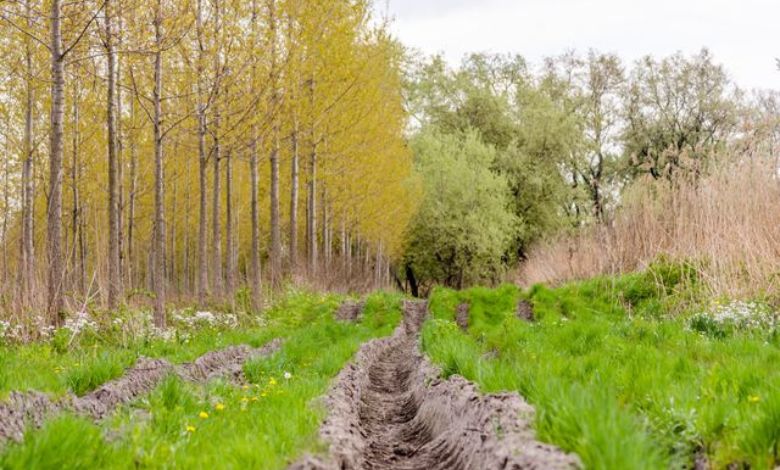
The tire tracks were ready.
The family used the same general route to the creek.
Nobody was given formal permission.
And nobody was tapped or eavesdropped. The use during the applicable statutory period.
Those facts can possibly support a prescriptive easement The requirement depends on the law of the state where the property lies but the neighbor It will not be created automatically. The owner of the strip of the earth The potential right Usually there will be concern about the use Of the route himself Change now one important fact.
Assume. My uncle’s father clearly stated to the neighbor,“ You can use this path. I will allocate your permission.” This can have a significant impact on the analysis because fair use is generally not met. The adverse- use requirement.
The precise legal consequences will still depend on the state’s law and the evidence.
Duration of Prescriptive Easement Claim
A landowner’s most crucial question is likely:
There’s no fixed national period.
Each U. S. state has its own law determining the length of the prescriptive period for easements, with a wide variety of lengths possible. As legal experts, the necessary length of time could start from just a few years to over 20 years, per various states’ laws.
Below is a list of a few well-known cases:
| State | Regular Period / Condition |
| California | Usually 5 years |
| Texas | In general, 10 years |
| Washington | No fixed period |
| New York | Rules applicable at the state level only |
| Oregon | Regularly 10 years |
| North Carolina | Casually 20 years |
| Georgia | This depends on the nature of the land and prevailing situation |
| Florida | In general, 20 years as the traditional rule mentioned through Florida court decisions. |
The listed numbers above should be regarded as initial estimates rather than definitive legal rulings.
California
California has been frequently cited as the five-year jurisdiction for prescriptive easements yet the claimant still has to show proof of fulfilling the legal conditions.
Texas
Texas illustrates well another major factor for the length of a prescriptive easement. its courts have outlined a prescriptive easement to consist of claiming adverse use open, notorious, continuous, and exclusive for the prescribed 10-year period, while the person making the claim will still have to provide the evidence.
North Carolina
North Carolina typically follows the precedent of recognizing the 20-year period for prescriptive rights under their case. Besides, a review of several North Carolina higher court opinions highlights that the obligation of making the case for easement lies with the proponent of the right.
Georgia
Georgia stands out for its rule which is not at a mere 20 years but rather much more complex than that.
Under Georgia law, a private way can be established by prescription after 7 years of continuous use upon improved lands, or 20 years upon wild lands.
Also, Georgia case law recognizes other rules of prescriptive easements.
So, the broad statement that Georgia takes twenty years for every case was not definitive enough.
The Florida cases recognize the common-law principle of 20 years continuous, and uninterrupted use will establish a prescriptive right. But the specific facts and legal reasoning persist.
The fairest general rule is a simple one: before concluding that a certain period applies, always look to the law of the state where the property in question was situated.
Easement by Prescription vs.
These 2 terms are often confused. Here is the simplest way to understand them:
Easement by Prescription
The claimant has the right to use the property of another for a specific use. Typically, ownership stays with the initial owner of the land.
Adverse Possession
The claimant strives to obtain title to property using possession which complies with the legal requirements of the jurisdiction.
The two doctrines are connected; but they are not mutually exclusive.
Cornell University Justice Center’s Legal Information Institute explicitly points them out by stating that; prescription gives an easement whereas adverse possession gives title.
For instance, if your neighbor has been using just a portion of your land for a driveway, this would be an easement rather than a claim of ownership.
Perhaps if you wish to reduce the chance of an easement through-prescription disagreement, you may wish to be proactive.
Put Permission in Writing
If you let someone use your property, think about formalising your consent.
A written agreement could also help to assert that the use is permissive and not adverse, though the specific language and legal consequences will vary by state.
Signs such as “Private Property” or notices indicating that use is by permission, according to the state and situation, can be a way of showing that a landowner did not intend to admit the use.
Still signage is not a catchall that can be applied uniformly regardless of state.
It depends, after all, upon state law.
Think about things like how you might keep a record of the use and, where relevant, inform the user that it is not OK to use it.
It would be wise for a landowner to seek local legal advice before taking any action that could jeopardise an existing easement claim.
Save copies of:
- Written authorizations.
- Letters and emails the candidates favorite way of communication was through letters and email; 44 of them prefer to write than to call.
- 69 only 24 prefer a phone conversation over writing.
- Overhoo. es its help.
- Maps
- Photographs
- Property recordsIn the name of of/of a/the off.. 1961-1931 owner name remaining owner name; Location or Address available 2 684 id file.
- Entrances to neighbors
If a property dispute goes to court, good documentation can prove very useful.
How Claimants Can Build a Strong Case
If you are that person who has been utilizing someone else’s land for decades and are of the notion you perhaps have obtained prescriptive easement, the evidence is just as vital.
Document the History of Use
Look for:
- Historical images, photographs of historic buildings, places or exhibits. These can also be new photographs that are intended to represent something from the past or to reveal something about the past.
- Property records.
- Maps
- Correspondence
- Witness statements: there are several reports from witnesses who observed the incident taking place.
- Additional evidence of the effect of and duration of use of the property
The burden of establishing the requirements of the prescriptive easement normally rests on the claimant.
Texas and North Carolina authorities, for instance, expressly burden the claimant with this required proof.
In the event that your usage was actually permitted, that can defeat an adverse-use argument. Do not suppose that a long period of use is enough to establish an easement.
Consider Clarifying the Record
In case of a genuine dispute as to the existence of an easement, the parties may require a legal action to determine their rights.
In some cases, it may require a declaratory or quiet-title action, recording documents, or other means.
The proper procedure varies under state law and the holdings in each of the property record examples used.
FAQs:
Q. Is actual knowledge of the owner needed for a prescriptive easement?
No, not in all cases.
The use must be open and notorious enough to have been discoverable by the owner, so that actual knowledge is unnecessary.
Q. A land owner granted a right over his land through a prescriptive easement. Can he remove the right after it has been constituted?
Not just because the landowner has simply retracted his offer.
The manner and grounds by which a prescriptive easement can be created or extinguished are a matter of the law of the state where the property is located and the facts of each case..
The rules on abandonment and nonuse are different given the province. For example, Georgia law offers for situations where an easement may be terminated by abandonment or nonuse.
Q. Does a right of permission halt an easement by prescription?
Permissive use as a general rule does not meet the criteria of adverse-use.
It remains to be determined in each case the actual role that permission will have.
Q. Must there be a judgment from a court to give a prescriptive easement?
No, not at all.
A prescriptive easement can also be established by the operation of state law once the requisite conditions are proven.
In instances of ownership and/or access controversies, a court action might be needed to establish the appropriateness and extent of the easement.
They are appropriates course of law to apply. which# the fact lies subject to.
The Key Taking:
- My uncle’s story came out nicely in the end.
- He sat down with the neighbor and they hashed out the problem and finally agreed to a slight rearrangement of their new garden path. They wrote it down so that in twenty or thirty plus years they won’t start thinking, “did you say I should have let you do that?! ” and start arguing about it.
- That was probably the best scenario they could have had, mutual understanding and no lawsuit.
- But not every neighborhood disagreement over property rights has such a happy ending.
- Ownership of land brings several responsibilities; one such is dealing with the situation that your neighbor has continued to use a driveway pathway road, or any other part of your property for several years. Still, you cannot simply take it for granted that the usage is legal. At the same time, you cannot also think it is illegal automatically.
- The facts make the difference.
- In each state, the time period that should be met for the right claim differs. Besides, other components may also differ. For example, according to whether the person claiming was the owner or a user (tenant), Georgia applies different rules; the law in Texas prescribes a clear set of features of the use like exclusive one, for a prescriptive easement.
- Should it happen you are worried somebody is building up an easement over your own house or if you think you might possess legal right to a neighbor`s property, get in touch with a real estate lawyer from the state where the real estate is situated.
- Sometimes you need only a short conversation with a lawyer and this can be a lot cheaper compared to waiting until you have found out everything through the court, where you have to pay a lot of money as it will.
Additional Resources:
- Cornell Law School’s Legal Information Institute — Easement by Prescription: A plain-language overview of prescriptive easements and the general legal principles involved.
- American Bar Association — Real Property, Trust and Estate Law Section: Professional resources covering real-property and estate-law topics.