

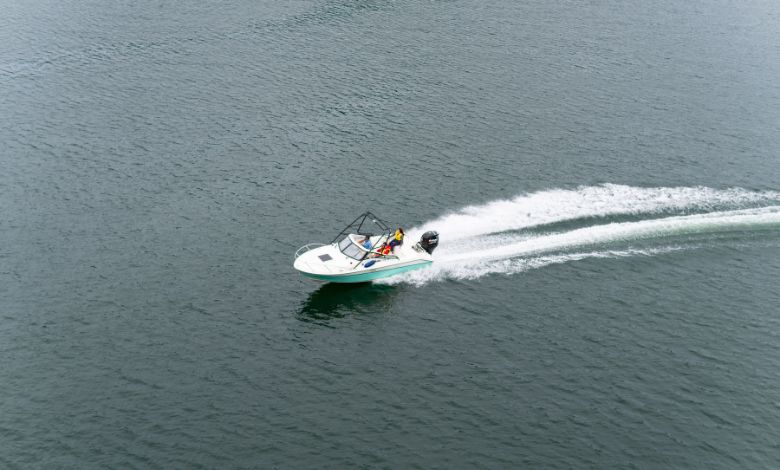

Discover what determines if a speed is safe for your boat, from weather and traffic to no-wake zones, and cruise with real confidence.
I still remember. My first “Should have been slower” moment.
Three months in possession of my first Boat- sunless 19- foot bowrider, I cruised back. The marina feeling: Be a little too pleased with yourself. The sky changed from clear to grey. Twenty minutes flat, as it sometimes does.
I didn’t rest. The throttle Until I almost missed it. A channel marker I bob the chop.
That’s when it hit me: I hadn’t. Real idea what determines if you are safe for speed your boat , a question that really falls under personal law and the responsibilities every boater carries on the water. I just assumed “safe” meant what felt like fun and stayed away from it a ticket.Safe speed is not a vibe, Although and it is not. A fixed number Either It’s A moving target that changes with conditions, and the U. S. Coast Guard Actually explains it under personal law through Navigation Rule 6.Let’s interrupt it down together- the way I wish someone was for me.
What decides a Safe Speed to Your Boat?
A safe speed allows you to identify threats in time, avoid them. A collision, And stop or maneuver within. A reasonable distance, It doesn’t matter what’s going on around you.
Federal Navigation Rules You have to constantly adjust your speed Based on:
- Visibility and lighting conditions
- Traffic density But the water
- Your vessel’s maneuverability and stop length
- Water depth And nearby hazards
- Wind, Current, and sea state
- Local laws, Demarcated boundaries and no- wake zones
Here’s Critical: safe speed Not fixed as a car’s speedometer, where 35 mph means always 35 mph.
On water, 15 mph can be careless in fog and perfectly fine on flats, empty lake At noon he is the part that trips up new boaters- this one definitely got me hooked.
Now let’s go factor by factor, because this is the stuff It keeps you( and everyone else) inside. One piece.
1. Visibility And lighting: Can you really recognize what’s going on?
It seems obvious until you’ve been out there.
The fog spreads quickly. Coastal waters. I have seen a shoreline I could witness clearly. 7 a. M. Completely absent 7: 20.
Heavy rain, blinds the low sun, and nighttime boating Everyone shrinks your reaction window.
This is it. The rule of thumb I now use:
If you cannot identify yourself. An object early Enough to react, you’re going too expeditious. The conditions.
This applies to other boats, swimmers, buoys, something This single factor Mostly runs. What determines if a speed is safe for your boat, Because every other factor Suppose you can witness. The danger First it’s But top of you.
2. Traffic Density: The Water is Rush Hour also
I used to analyze that sailing meant avoiding traffic.
A holiday weekend But a packed channel Taught me something else.
Crowded coves, like darting around on a jet ski. It’s a video game- it quickly becomes chaotic, and it’s demanding. A different approach from an empty stretch of water.
In heavy traffic, being lazy isn’t just polite- other boaters are unexpected.
Someone can decrease across your bow to capture a better spot. A paddleboarder can grow into it. A lane You didn’t expect.
Conduct your navigation Also properly lit. They’re Not only a legal box To check- they explain. Other boaters What are you planning to do?
A boat with weak or missing lights in a crowded area becomes a hazard but its own.
3. Your Vessel’s Size, Weight, and Response Time
Here’s something that surprised me: my small bowrider and my buddy’s 34- foot cabin cruiser don’t perform past the same rules, even in identical conditions.
Big, heavier boats take more time to stop and expand. Means more mass and speed. Slower response, Duration Consider it as braking. A motorcycle vs a loaded delivery truck. Same way, same weather, Wild different stopping distances.
That is why safe speed must be accounted for by your vessel’s specific handling characteristics, strength, and response time.
If you have recently upgraded. A bigger boat, assume your old instincts still apply.
Mine No, I learned it again. The humbling way.
4. Water and weather conditions: Read The room
The weather is on the water and plays off its own rules.
Only air is not formed, things are bumpy, It fights your steering and creates waves and swells prefer the kit. Your control And effective speed.
Rough water, strong currents, and strong winds mean you have to. Dial back your speed to maintain the boat stable.
I’m checking. Marine- specific weather apps Religious Now- Predict Wind is one I think because it captures the details a standard weather app misses, like swell direction and gust patterns near the coast.
It is saved. A few of my trips were ugly.
Water conditions Also the matter, and new boaters It is often remembered that: the position and weight distribution of How does your boat affect you? much water It changes, it changes. Your speed and handling.
Congestion the back of the boat, And you will feel the difference How it rides through the cut.
5. Dangers and Shallow Water: What You Can’t See
Some of my scariest moments have nothing to do with sailing. Other people, They are about what is underneath. The surface.
Drowned rocks and sandbars No self- declaration.
I once ran, cautiously, into water that seemed quite intensive. He taught me to trust depth charts and local knowledge over guesswork.
Almost slowly shallow water or known hazards. It is not negotiable.
Going too swift here not only risks scratching– it can cause damage. Your prop, The strap your boat, or throw passengers Balance below a sudden stop.
6. Local Rules and No- Walk Zones: Rules, Not a suggestion.
This is where “safe” and “legal” overlap, and both matter.
States are established. Their own speed I limit controlled areas, Florida, for example, posts maximums Of 25, 30, and 35 mph depending on the waterway.
The rule Almost everywhere you go, however, is a no- wake zone.
These zones You must travel. A speed which produces minimal wake– enough to maintain steering.
You’ll usually search them 100 To 200 feet of shorelines, Docks, swimmers or anchored boats.
To break this rule It just isn’t a fine waiting It rocks other boats to be, erodes shorelines, And sets the swimmers. Real risk.
I once saw a boat flying too fast in the no- wake zone- the wake shook an anchored pontoon hard enough to knock out a cooler and two drinks in the water.
No one was injured at the time. It could easily have been worse.
Quick- Reference Checklist
Before you choke, administer. This fast mental checklist:
| Factor | Query yourself |
| Visibility | I can see hazards quick enough to react? |
| Traffic | Is the water crowded or just unexpected? |
| Vessel handling | How fast can you do it? Does my boat stop or transform? |
| Water/ weather | Wind, waves or waves. Current fighting My control? |
| Hazards | Am I close to shallow water, stone, or a sandbar? |
| Local rules | Am I in a no- wake zone or posted? speed limit? |
FAQs approx Safe Boating Speed
What is considered a safe speed But the water?
Oh safe speed Lets you recognize hazards, avoid collisions, and stop or maneuver in time, is continuously adjusted for visibility, traffic, your vessel’s handling, And local conditions.
It is not a single “safe” number; It changes with that situation.
Are you following along? speed limits But a boat?
yes States And local authorities Post enforceable speed Restrictions many waterways, and nine wake zones apply. Near shorelines, Ports, and swimmers almost everywhere the U. S.
What happens if you function? a boat But an unsafe speed?
You risk losing control, crashing. Other vessels or hazards, Harmful your hull or support, and appearance fines or citations.
Unsafe speed near shorelines or swimmers can also cause it. Real injury.
Final Thoughts:
- If I could tell my past self one thing, standing at the helm for three months, owner of the boat, it’s this: safe speed is not a number you remember and you forget.
- It’s a constant, active read of everything about you, heaven, the water, traffic, your own boat’s limits, and the law.
- The best boaters are not the fastest and most confident I know.
- They’re Who are constantly adjusting, without thinking, because they have been internalized.
- What determines if a speed is safe for your boat. It has become second nature.
Additional Resources:
- BoatUS Foundation Boating Safety Courses: free, state-approved boating safety education covering safe speed, right-of-way, and more.
- Discover Boating’s Boating Safety Guide: practical, easy-to-follow safety tips for new and experienced boaters alike